 GambleLore
Introduction
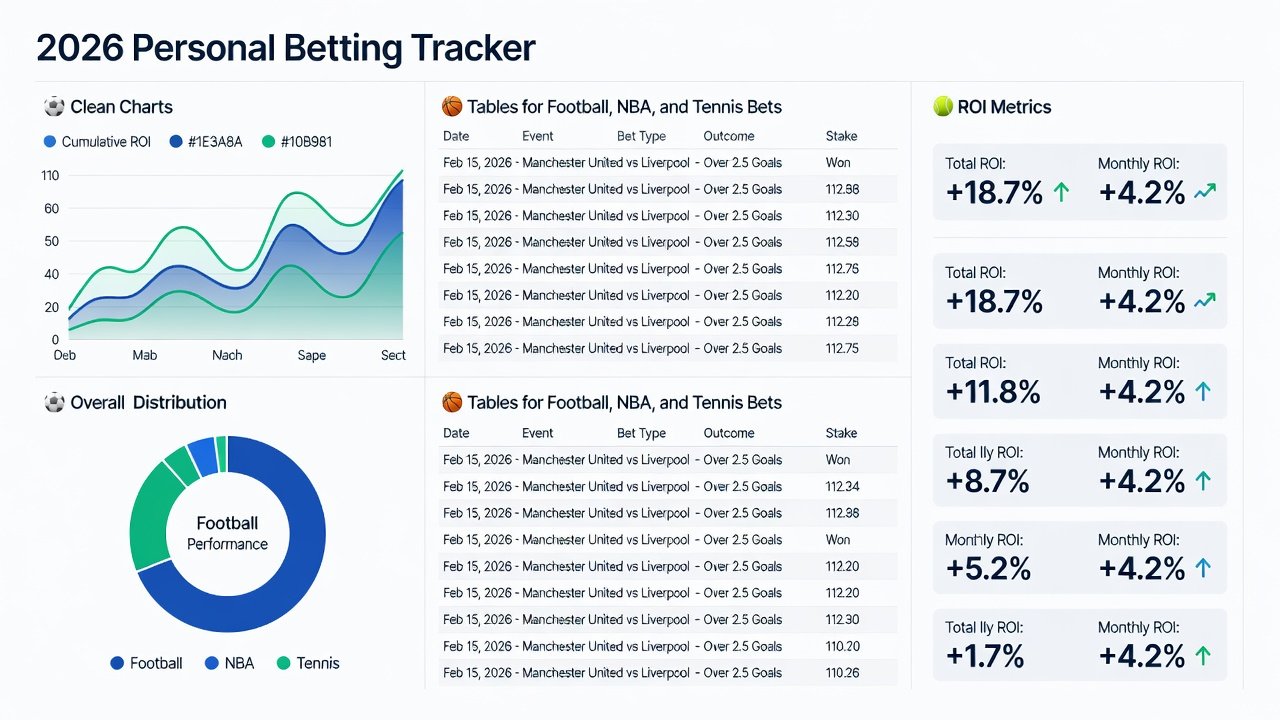
Building a personal betting tracker helps you stay organized across football, NBA, and tennis in 2026. By logging every wager and reviewing results regularly, you gain clarity on performance and identify areas for improvement without relying on memory alone. This system turns raw betting data into actionable insights, allowing you to refine your approach season after season. Whether you place a handful of bets each week or track dozens across multiple sports, a structured tracker provides the foundation for consistent evaluation and long-term progress.
Why a Dedicated Tracker Matters
A well-designed system reveals sport-specific trends that generic apps often miss. Football matches, NBA games, and tennis tournaments each produce unique data points, from goal margins to set percentages. Tracking these consistently supports better decision-making over the long season. Without structured records, it becomes difficult to separate luck from skill or to recognize when certain bet types consistently underperform. Many bettors notice that their success in one sport does not translate directly to another, making separate yet unified tracking essential for accurate cross-sport comparisons.
Essential Metrics to Monitor
Focus on return on investment (ROI), strike rate, and average odds. ROI shows profit relative to stakes, while strike rate measures win percentage. Add filters for sport, bet type, and odds range to uncover patterns quickly. Additional useful metrics include average stake size, longest winning streak, and profit by month to highlight seasonal variations. You can also track closing line value to see how often your bets beat the final odds offered by bookmakers.
- ROI calculation: (Profit / Total Stake) × 100
- Strike rate: (Winning Bets / Total Bets) × 100
- Trend columns for home/away, over/under, and player props
- Profit per sport breakdown for balanced portfolio review
- Average odds received versus closing line for value assessment
Step-by-Step Spreadsheet Setup
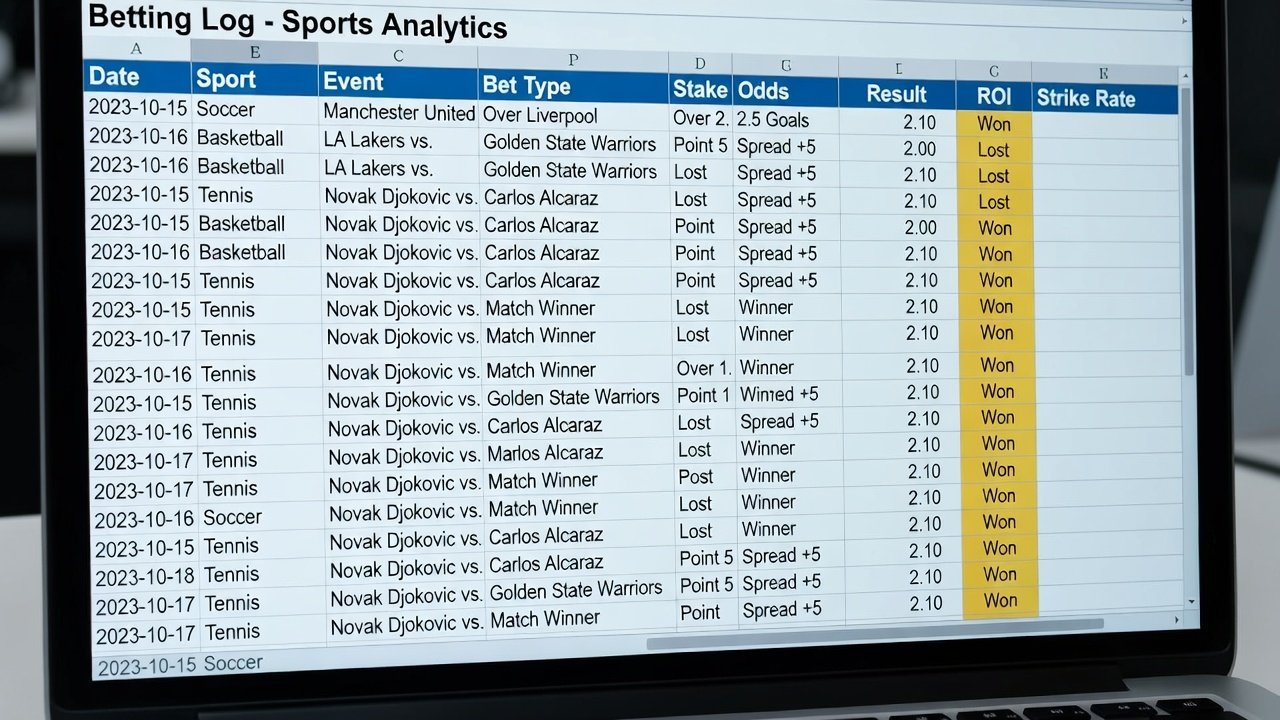
Start with a simple Google Sheet or Excel workbook. Create columns for date, sport, league, teams or players, bet type, stake, odds, result, and profit/loss. Use formulas to auto-calculate ROI and strike rate per sport. Separate tabs for football, NBA, and tennis allow deeper analysis. Add conditional formatting to highlight losing streaks or high-ROI categories. Include a notes column for qualitative observations such as weather conditions or player injuries that influenced the outcome. Begin by entering historical bets from the past three months to establish baseline data. Then commit to daily entries moving forward. Protect your sheet with version history enabled so accidental deletions can be reversed easily. Test your formulas on a sample row before scaling to hundreds of entries.
Using Simple Apps for Tracking
Free tools like Google Sheets mobile or lightweight apps such as Excel for iOS/Android work well for beginners. For more automation, consider basic scripts that import odds data. Always back up your sheet weekly to avoid data loss. Mobile access lets you log bets immediately after placement, reducing the chance of forgotten entries. Explore add-ons within Google Sheets that generate automatic charts for visual trend spotting. If you prefer voice input, some apps support quick logging through voice-to-text features, which is especially useful during live events.
Real Examples: Prop Bets vs Futures
Log a football player prop as: date, sport=football, bet=over 0.5 goals, stake=50, odds=2.1, result=win. For NBA futures, record championship winner bets with longer timelines and separate outcome columns. Tennis props often involve set or game totals, which benefit from dedicated trend columns. Compare a prop bet on an NBA player points total against a futures bet on the same team to reach the playoffs. This side-by-side view shows how short-term variance differs from long-term outcomes and helps you allocate stakes more effectively. Another example is tracking tennis match winner props versus set handicap bets to see which format yields higher consistency across clay, grass, and hard courts.
Spotting Patterns in Betting Odds
Review weekly or monthly summaries to spot when your edge appears in specific leagues or player matchups. Compare your logged odds against closing lines from NBA official site or ATP Tour to measure value captured. Look for recurring success in underdog bets within certain conferences or surface types in tennis. Over time, these patterns guide you toward higher-value opportunities and away from consistently poor categories. You may discover that your football bets perform better on weekends while NBA midweek games show different trends due to travel schedules.
Manual vs Automated Tracking Comparison
Manual spreadsheets offer full control and zero subscription cost but require daily entry time. Automated methods using simple scripts save hours yet may need occasional fixes. Most bettors start manual and add automation only after three months of consistent logging. Manual entry forces you to review each bet closely, reinforcing learning, while automation excels at generating instant reports once the system is stable. Evaluate both approaches by running them in parallel for one month before deciding. A hybrid method, where you log manually but use scripts for monthly summaries, often provides the best balance for serious trackers.
Maintaining Your Tracker Long-Term
Schedule monthly audits to clean duplicate entries and update any incorrect results. Export data quarterly into a master archive for year-over-year comparisons. This habit prevents data bloat and keeps your active tracker responsive. Consider color-coding by profit level to make visual scans faster during busy periods. Set calendar reminders for these reviews so the task does not get overlooked during peak betting seasons.
Common Errors and FAQ
Q: Should I track every micro-bet? Yes, even small wagers reveal important patterns when aggregated.
Q: How often should I review data? Weekly reviews catch issues early while monthly deep dives highlight seasonal trends.
Q: What if I miss logging a bet? Add a notes column and reconcile against bookmaker statements at month-end.
Q: Can I include live betting in the same tracker? Yes, but add an extra column to separate pre-match and in-play results for accurate analysis.
Q: How do I handle voided bets? Mark them separately so they do not skew strike rate calculations.
Q: Should I include odds movement data? Adding a column for opening and closing odds helps identify how line movement affected your results.
Conclusion
A personal betting tracker built for 2026 football, NBA, and tennis keeps your records clear and actionable. Start simple, refine columns as you learn, and review regularly to improve results over time. Consistent use transforms scattered bets into a structured learning tool that supports smarter decisions across all three sports.


No comments yet. Be the first!